Blog
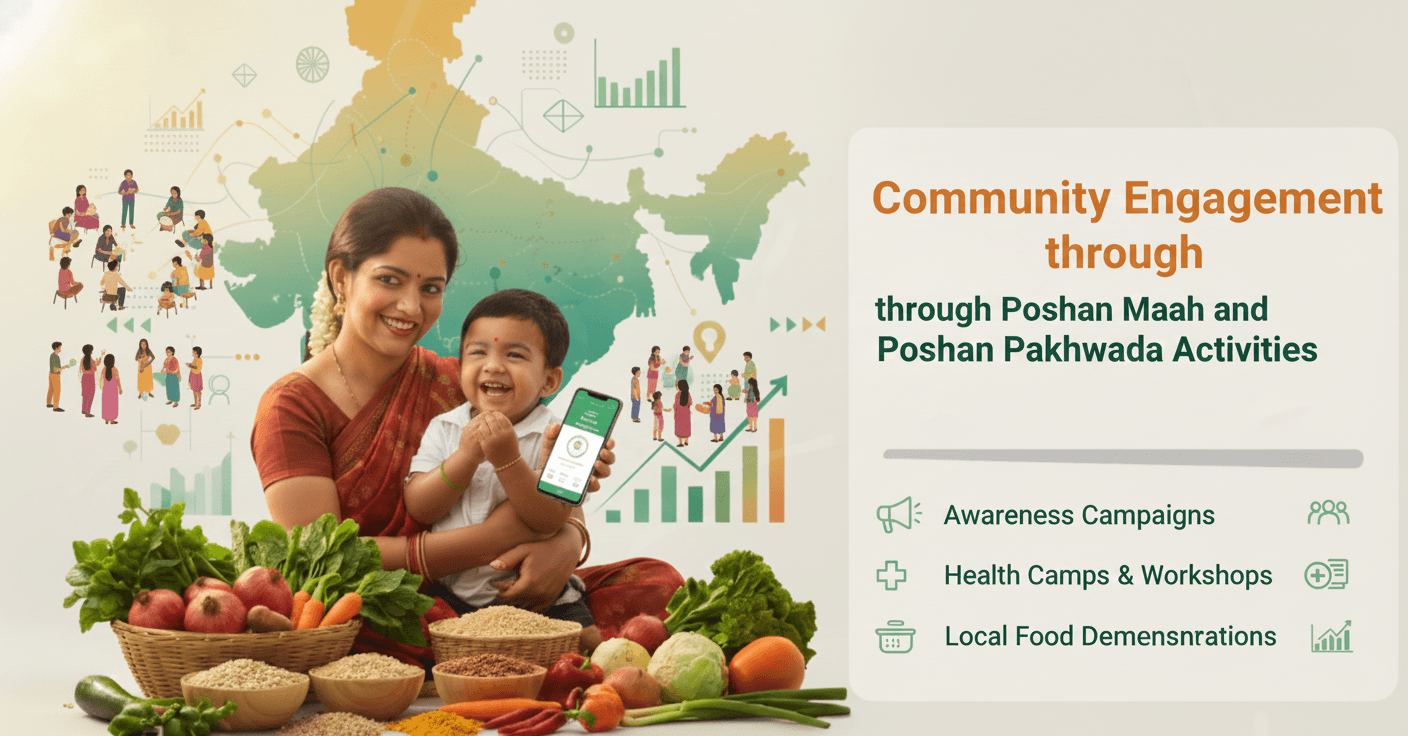
Community Engagement through Poshan Maah and Poshan Pakhwada Activities
Nutrition outcomes do not improve only through schemes and budgets. They improve when communities understand, participate, and take ownership. This is where Poshan Maah and Poshan Pakhwada play a critical role. Designed as large-scale nutrition awareness campaigns, these initiatives bring nutrition conversations out of government offices and into homes, Anganwadi centres, schools, and village streets. Through well-planned community-based nutrition events, Poshan Maah and Poshan Pakhwada strengthen last-mile engagement and make nutrition a shared responsibility. This article explains how these initiatives work, why they matter, and how they can be implemented more effectively at the ground level.
Understanding Poshan Maah and Poshan Pakhwada
Poshan Maah is observed every year in September as India’s nutrition month. It focuses on sustained awareness and behaviour change around maternal and child nutrition. Poshan Pakhwada is a 15-day focused drive conducted twice a year, designed to intensify outreach, participation, and service delivery around specific nutrition priorities. Together, they form the community engagement backbone of India’s nutrition strategy.
Why Community Engagement Is Central to Nutrition Outcomes
Nutrition challenges in India are not caused only by lack of food. They are influenced by:
- Feeding practices
- Awareness gaps
- Cultural beliefs
- Access to services
A nutrition awareness campaign works best when people see, hear, discuss, and practice healthy behaviours together. Community-level engagement creates:
- Trust in public programmes
- Peer learning
- Social accountability
- Sustained behaviour change
This is why local nutrition initiatives are more effective than one-time messaging.
Poshan Maah Activities: Turning Awareness into Action
Well-planned poshan maah activities go beyond rallies and posters. Effective activities focus on interaction, demonstration, and dialogue. Common activities include:
- Nutrition counselling sessions for mothers
- Growth monitoring drives
- Recipe demonstrations using local foods
- School-based nutrition talks
- Community pledge events
When these activities are participatory, they leave a lasting impact.
Poshan Maah Theme: Giving Direction to Engagement
Each year, the poshan maah theme provides a clear focus area, such as:
- Maternal nutrition
- Child feeding practices
- Anaemia reduction
- Hygiene and sanitation
A clear theme helps Anganwadi Workers, supervisors, and local leaders align activities instead of working in silos. Theme-based planning also improves reporting and evaluation.
Poshan Pakhwada 2026: What Makes It Important
Poshan Pakhwada 2026 is expected to place even stronger emphasis on:
- Community ownership
- Convergence with health, education, and sanitation
- Digital reporting of outreach activities
The focus is shifting from the number of events conducted to the quality of engagement and follow-up actions. This evolution reflects a maturing approach to nutrition programming.
Types of Community-Based Nutrition Events That Work
Not all events create impact. The most effective community-based nutrition events share a few common features. High-impact formats include:
- Mothers’ group discussions
- Village Nutrition Days
- Home visit-based counselling during Pakhwada
- Adolescent nutrition sessions
- Community-led monitoring meetings
These formats encourage two-way communication instead of one-sided messaging.
Role of Anganwadi Workers and Local Institutions
Anganwadi Workers are the face of both Poshan Maah and Poshan Pakhwada at the village level. Their role includes:
- Planning and conducting activities
- Mobilising community participation
- Coordinating with ASHAs, ANMs, and schools
- Documenting outreach and outcomes
Support from Panchayats, SHGs, teachers, and community leaders strengthens reach and credibility.
Linking Nutrition Month India with Local Action
Nutrition Month India succeeds when national messaging translates into local relevance. This happens when:
- Local food habits are respected
- Messages are delivered in simple language
- Communities see immediate benefits
- Follow-up actions continue beyond the event
One month of focused action can trigger year-long behaviour change if designed well.
Measuring the Impact of Poshan Maah and Poshan Pakhwada
Impact should not be measured only by the number of events conducted. Meaningful indicators include:
- Increase in service uptake
- Improved growth monitoring coverage
- Better attendance at Anganwadi centres
- Behaviour changes reported by families
Good documentation helps improve future planning and funding decisions.
Challenges in Community Engagement and How to Address Them
Common challenges include:
- Low participation in some areas
- Repetition of activities without innovation
- Limited follow-up after events
These can be addressed by:
- Involving local influencers
- Using interactive formats
- Linking events to regular service delivery
Strong planning and supervision make a significant difference.
FAQs
Frequently Asked Questions (FAQs)
What are poshan maah activities?
They are community-focused activities conducted during Nutrition Month to promote healthy nutrition practices.
What is the purpose of Poshan Pakhwada?
To intensify nutrition outreach and engagement through focused 15-day campaigns.
What is special about poshan pakhwada 2026?
It is expected to emphasise quality engagement, convergence, and better reporting.
How does a nutrition awareness campaign help communities?
It improves knowledge, encourages behaviour change, and increases service uptake.
What is the poshan maah theme?
A yearly focus area that guides planning and messaging during Nutrition Month.
Why is nutrition month India important?
It creates nationwide attention and momentum around nutrition issues.
Who organises community-based nutrition events?
Primarily Anganwadi Workers with support from health staff and local institutions.
How can local nutrition initiatives be made more effective?
By involving communities, using local examples, and ensuring follow-up.
Are these activities only for mothers and children?
No. Adolescents, fathers, elders, and community leaders are also important participants.
How is the impact of these campaigns measured?
Through service coverage, participation levels, and observed behaviour changes.
Final Takeaway
Poshan Maah and Poshan Pakhwada are not just calendar events. They are powerful tools for community mobilisation when used thoughtfully. Strong poshan maah activities, well-planned poshan pakhwada 2026 initiatives, and inclusive community-based nutrition events can transform nutrition from a government programme into a people’s movement. When communities understand nutrition, participate actively, and take ownership, outcomes improve. That is the true purpose of nutrition month India and the many local nutrition initiatives built around it.