
Blog
Cross-Sector Convergence: Health, Education, and Sanitation for Nutrition
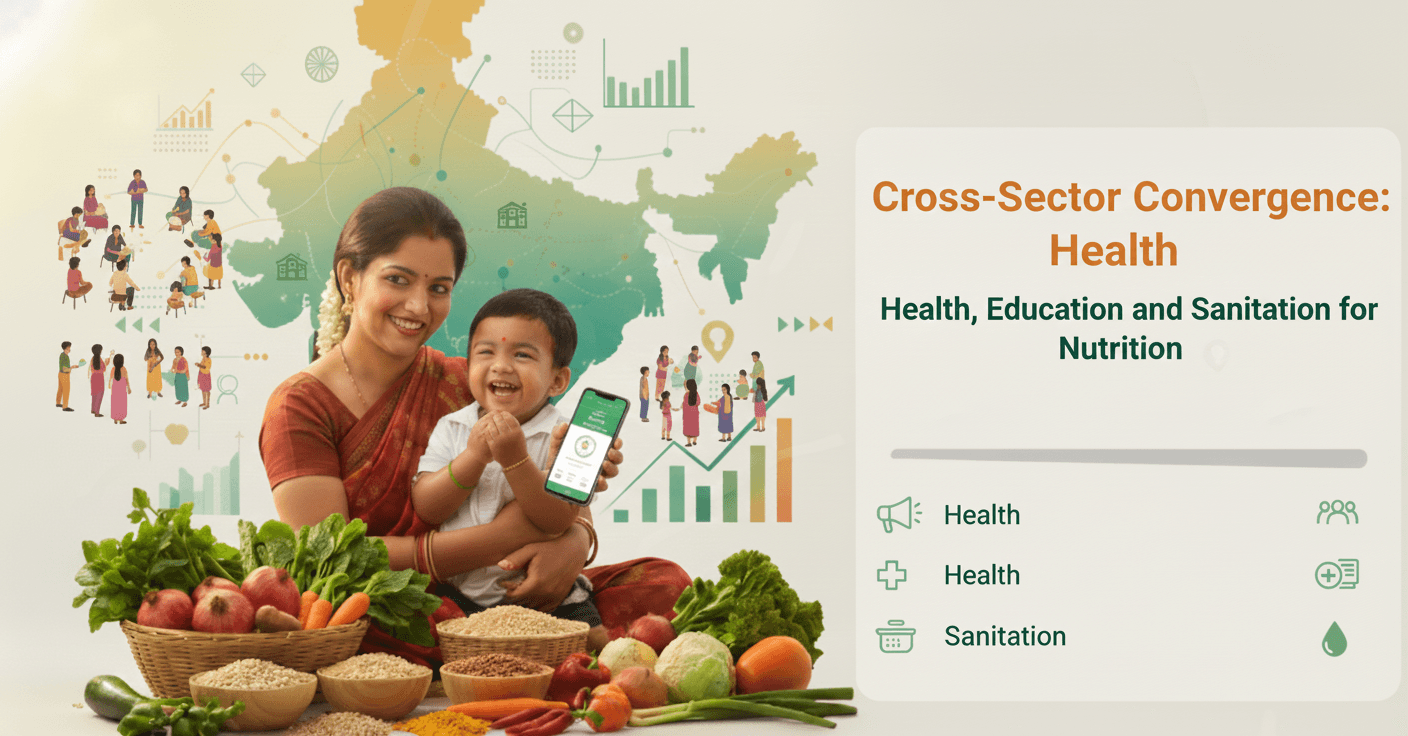
Malnutrition is not caused by a single factor, and it cannot be solved by a single department. A child’s nutrition status is shaped by healthcare access, feeding practices, clean water, sanitation, education, and household behaviour. This is why cross-sector convergence sits at the core of India’s nutrition strategy. Under convergence under poshan abhiyan, nutrition is no longer treated as a standalone programme. It is approached as a shared outcome of health systems, schools, sanitation services, and community development efforts. This article explains why convergence matters, how it works in practice, and what makes it succeed or fail on the ground.
Why Nutrition Needs a Multi-Sectoral Approach
Traditional nutrition programmes focused mainly on food supplementation. While important, food alone cannot address:
- Recurrent illness
- Poor sanitation
- Lack of nutrition awareness
- School absenteeism
- Gender and social inequalities
A multi-sectoral nutrition approach recognises that nutrition outcomes improve only when multiple systems work together. Health, education, water, sanitation, and social protection must move in the same direction.
Understanding Convergence under Poshan Abhiyan
Convergence under poshan abhiyan refers to coordinated planning, implementation, and monitoring across departments whose work affects nutrition outcomes. This includes alignment between:
- ICDS and health departments
- Schools and early childhood services
- Sanitation and drinking water missions
- Panchayati Raj institutions and community bodies
The goal is simple: reduce fragmentation and ensure beneficiaries receive a complete package of services.
Health and Nutrition Programs: The Foundation of Convergence
Strong health and nutrition programs form the backbone of nutrition outcomes. Key convergence points include:
- Antenatal and postnatal care linked with nutrition counselling
- Immunisation integrated with growth monitoring
- Referral of malnourished children from Anganwadi centres to health facilities
When health and nutrition services operate in silos, children fall through the cracks. Integration ensures continuity of care.
ICDS and Health Integration at the Ground Level
ICDS and health integration is most visible at the frontline. At the village level, this includes coordination between:
- Anganwadi Workers
- ASHAs
- ANMs
Together, they:
- Identify high-risk children and mothers
- Ensure follow-up and referrals
- Reinforce consistent messaging on feeding and care
Where coordination is strong, outcomes improve noticeably.
Role of Education and School Nutrition Initiatives
Nutrition does not stop at early childhood. School nutrition initiatives play a crucial role in sustaining gains. Convergence with education systems supports:
- Mid-day meals for school-going children
- Nutrition education in classrooms
- Early identification of health and nutrition issues
Schools also act as platforms for reaching adolescents, especially girls, with nutrition and health messages.
Sanitation, Hygiene, and Nutrition-Sensitive Development
No nutrition programme can succeed without clean water and sanitation. Poor sanitation leads to:
- Repeated infections
- Poor nutrient absorption
- Growth faltering
Nutrition-sensitive development integrates sanitation, hygiene, and water access into nutrition planning. This includes convergence with:
- Swachh Bharat Mission
- Jal Jeevan Mission
- Community hygiene campaigns
Healthy environments support healthy children.
Interdepartmental Coordination: From Policy to Practice
Interdepartmental coordination sounds straightforward on paper but is challenging in practice. Effective coordination requires:
- Clear role definition
- Shared indicators and goals
- Regular review meetings
- Data sharing across departments
Where departments plan together instead of reporting separately, convergence becomes real.
Data and Monitoring as Enablers of Convergence
Digital systems have made convergence easier to monitor. Shared data helps:
- Identify service gaps
- Track beneficiaries across programmes
- Align interventions geographically
Without common data points, convergence remains aspirational rather than operational.
Challenges in Implementing Cross-Sector Convergence
Common challenges include:
- Departmental silos
- Competing priorities
- Limited communication
- Accountability gaps
These challenges cannot be solved through circulars alone. They require leadership, incentives, and continuous coordination at all levels.
What Makes Convergence Work on the Ground
Successful convergence usually shares a few traits:
- Strong district leadership
- Clear coordination mechanisms
- Joint field reviews
- Respect for frontline realities
When systems support collaboration instead of adding layers of reporting, results follow.
FAQs
Frequently Asked Questions (FAQs)
What is convergence under poshan abhiyan?
It is coordinated action across departments to improve nutrition outcomes.
Why is a multi-sectoral nutrition approach important?
Because nutrition is influenced by health, education, sanitation, and social factors.
How do health and nutrition programs work together?
Through shared services like growth monitoring, counselling, and referrals.
What is icds and health integration?
It is coordination between ICDS and health workers to ensure continuous care.
How do school nutrition initiatives support nutrition goals?
They provide meals, education, and early identification of nutrition issues.
What role does sanitation play in nutrition?
Poor sanitation increases illness and reduces nutrient absorption.
What is nutrition-sensitive development?
Development planning that considers nutrition outcomes across sectors.
Why is interdepartmental coordination difficult?
Because departments often work with separate systems, goals, and timelines.
How can districts improve convergence?
Through joint planning, shared data, and regular coordination meetings.
Does convergence increase workload for frontline workers?
When designed well, it reduces duplication and improves efficiency.
Final Takeaway
Nutrition outcomes cannot be delivered by one department alone. They depend on how well health systems, schools, sanitation services, and community institutions work together. Strong convergence under poshan abhiyan, a genuine multi-sectoral nutrition approach, effective icds and health integration, and meaningful interdepartmental coordination are essential for sustainable progress. When development becomes nutrition-sensitive, programmes stop working in isolation and start delivering real, measurable impact. That is how nutrition goals move from policy intent to healthier lives on the ground.