Blog
Poshan Abhiyaan 2026: New Guidelines, Digital Upgrades, and What Will Change for Anganwadi & ICDS
Poshan Abhiyaan 2026: New Guidelines, Digital Upgrades & What It Means for Anganwadi & ICDS
Explore Poshan Abhiyaan 2026 updates, including new nutrition guidelines, Poshan Tracker upgrades, ICDS reforms, and what will change for Anganwadi workers and beneficiaries.
Table of Contents
- What Is Poshan Abhiyaan 2026
- Why Poshan Abhiyaan 2026 Matters
- New Nutrition and ICDS Guidelines in 2026
- Digital Upgrades in Poshan Tracker
- Policy and Service Delivery Changes
- What This Means for Anganwadi Workers
- Impact on Children and Families
- Frequently Asked Questions
- Conclusion
What Is Poshan Abhiyaan 2026
Poshan Abhiyaan 2026 represents the next phase of India’s national nutrition mission, focused on strengthening how nutrition services are delivered, tracked, and evaluated across Anganwadi centres under ICDS. This phase builds on the digital foundation created through Poshan Tracker and introduces smarter systems, stronger health convergence, and updated nutrition protocols so that children, pregnant women, and lactating mothers receive timely and measurable support.
Why Poshan Abhiyaan 2026 Matters
India’s nutrition challenge requires more than just food distribution. It needs accurate data, early risk detection, and coordinated action across Anganwadi centres, health departments, and district administrations. Poshan Abhiyaan 2026 shifts the programme from basic reporting to intelligent programme management, where gaps in growth, coverage, and service delivery can be identified early and addressed before they become critical.
New Nutrition and ICDS Guidelines in 2026
The 2026 guidelines introduce more frequent and standardised growth monitoring for children, updated maternal nutrition protocols aligned with ANC schedules, and uniform counselling content across all Anganwadi centres. These changes ensure that children at risk of stunting, wasting, or being underweight are identified earlier, and that pregnant and lactating women receive consistent, evidence-based dietary and health guidance.
Digital Upgrades in Poshan Tracker
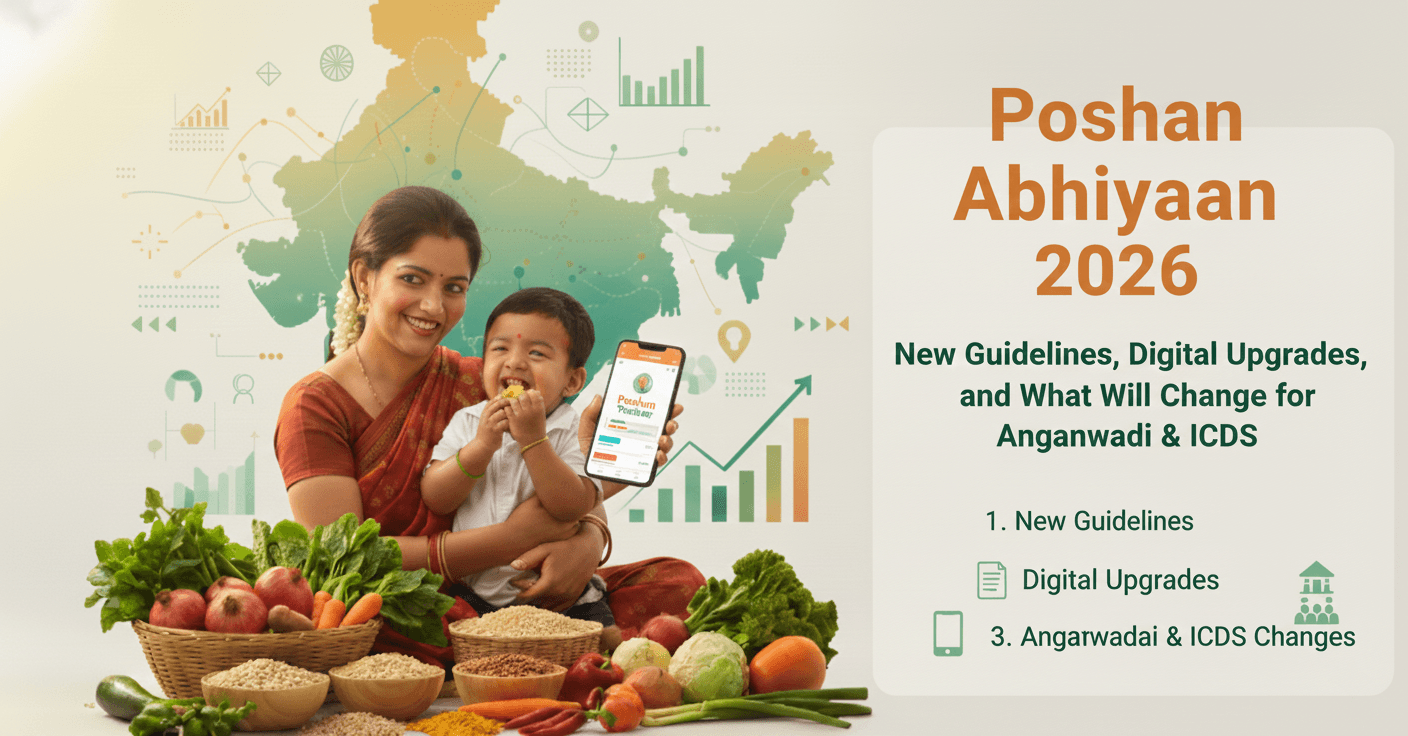
Poshan Tracker will move beyond basic data capture to become a smarter decision-support system. The upgraded app will support improved offline syncing, auto-filled fields to reduce entry errors, and built-in reminders for follow-ups and growth monitoring. Dashboards used by supervisors and district officials will include trend analysis and risk indicators, allowing teams to focus on high-need areas rather than relying only on monthly reports.
Policy and Service Delivery Changes
ICDS and Poshan Abhiyaan will operate with stronger convergence between Anganwadi workers, ASHAs, ANMs, and health facilities. Referrals, immunisation follow-ups, and maternal health services will be digitally linked to nutrition records, ensuring that no beneficiary is missed between systems. Programme performance will increasingly be guided by real-time data, allowing targeted support and capacity building where it is needed most.
What This Means for Anganwadi Workers
For Anganwadi workers, Poshan Abhiyaan 2026 reduces manual workload and increases clarity. The system will automatically highlight children who need urgent attention, mothers who require counselling, and households that have missed services. With better dashboards and automated prompts, planning home visits, nutrition sessions, and follow-ups becomes more efficient and more accurate.
Impact on Children and Families
Families will see faster identification of nutrition risks, smoother referrals to health services, and more personalised counselling based on actual child and maternal data. Children who are falling behind on growth will be supported earlier, improving long-term health and development outcomes.
FAQs
FAQs on: Poshan Abhiyaan 2026: New Guidelines, Digital Upgrades, and What Will Change for Anganwadi & ICDS
What is new in Poshan Abhiyaan 2026?
Poshan Abhiyaan 2026 introduces updated nutrition guidelines, smarter Poshan Tracker features, and stronger coordination between ICDS and health systems.
Will Poshan Tracker change in 2026?
Yes, the platform will include better dashboards, improved offline support, and data-driven risk indicators.
Do Anganwadi workers need new training?
Yes, training will focus on using the upgraded digital tools and understanding data-based nutrition planning.
Will existing beneficiaries need to register again?
No, current registrations will continue and only new beneficiaries will be added as usual.
How will this improve nutrition outcomes?
Earlier risk detection and better coordination ensure children and mothers receive timely interventions.
Will ICDS services change?
Core services remain the same, but monitoring and delivery will become more structured and efficient.
Does this affect funding and support?
Data-driven performance tracking will help allocate resources more accurately.
How does this help families?
Families receive quicker support, better guidance, and more reliable nutrition and health services.
Conclusion
Poshan Abhiyaan 2026 marks a major shift in how India manages nutrition at scale. By combining updated guidelines, smarter digital systems, and stronger integration between ICDS and health services, the programme moves towards a future where every child and mother is supported through timely, data-driven, and accountable nutrition care.