Blog
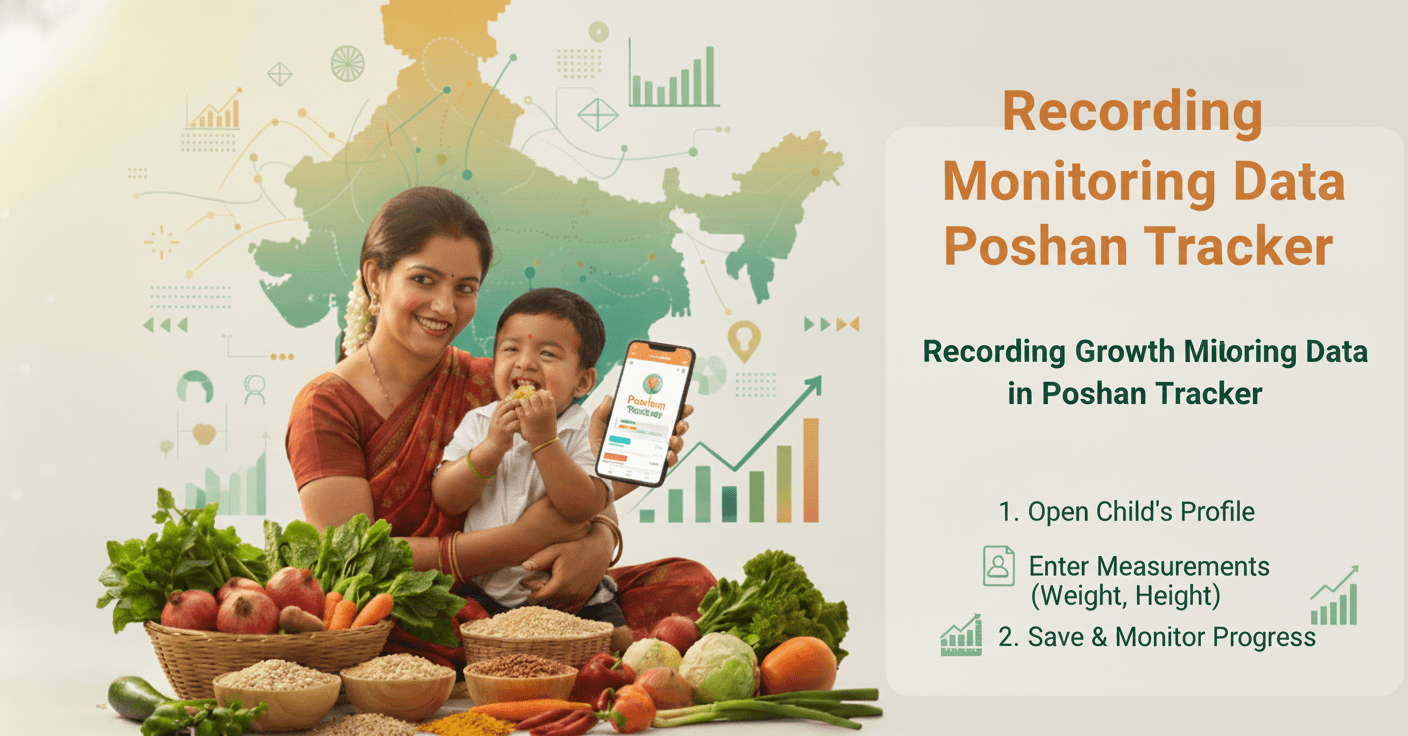
Recording Growth Monitoring Data in Poshan Tracker
Accurate growth monitoring is one of the most important responsibilities under ICDS. It helps identify undernutrition early, ensures timely intervention, and strengthens service delivery for children and mothers. With the introduction of the poshan tracker app, growth monitoring has shifted from manual registers to a digital, real-time system. However, many challenges still remain at the ground level, especially around anganwadi data entry, measurement accuracy, and understanding how growth data is actually used. This guide explains, step by step, how to correctly record growth monitoring data in Poshan Tracker and why it matters for child nutrition tracking and icds data reporting.
What Is Growth Monitoring in ICDS?
Growth monitoring in ICDS refers to the regular measurement of a child’s weight and height to assess their nutritional status. It helps identify children who are underweight, stunted, or wasted before the condition becomes severe. Under ICDS, growth monitoring supports:
- Early identification of malnutrition
- Counselling of caregivers
- Referral to health facilities or NRCs
- Planning of nutrition interventions at village and block level
When this process is done digitally through the poshan tracker app, it becomes easier to track trends, follow up on at-risk children, and improve programme outcomes.
Understanding the Poshan Tracker App
The poshan tracker app is a mobile application developed to strengthen nutrition service delivery under ICDS. It replaces multiple paper registers with a single digital system for:
- Anganwadi data entry
- Child nutrition tracking
- Growth monitoring records
- Beneficiary-wise service delivery
- Real-time icds data reporting
The app works both online and offline, which makes it suitable for rural and remote areas.
Who Is Responsible for Data Entry?
Accurate data depends on clear roles.
- Anganwadi Workers enter growth monitoring data and update beneficiary details
- Supervisors review entries, verify measurements, and support data quality
- CDPOs and district teams analyse reports and take corrective action
Good data quality always starts at the Anganwadi centre.
Step-by-Step Process to Record Growth Monitoring Data
Poshan Tracker Login
Use your assigned credentials for poshan tracker login. Before entering data:
- Ensure the app is updated
- Check that your Anganwadi centre is correctly mapped
- Confirm date and time settings on the device
Login issues can lead to missing or duplicate records later.
Selecting the Correct Child Profile
Incorrect profile selection is a common problem in anganwadi data entry.
Best practices:
- Verify the child’s name and date of birth
- Cross-check with the MCP card
- Avoid creating duplicate beneficiaries
Correct profiles are essential for accurate child nutrition tracking over time.
Measuring Weight and Height Correctly
Digital systems cannot correct manual errors.
Weight measurement
- Use a calibrated weighing scale
- Remove shoes and heavy clothing
- Record weight accurately
Height or length measurement
- Use an infantometer for children below 2 years
- Use a stadiometer for children above 2 years
- Ensure proper posture
Incorrect measurements result in misleading data on the digital growth chart.
Entering Data in the App
Once measurements are taken:
- Enter weight and height carefully
- Verify that the age is correctly calculated
- Save the record and sync when internet is available
The poshan tracker app automatically generates the child’s growth status.
Reading the Digital Growth Chart
The digital growth chart shows whether a child is growing as expected or facing nutritional risk.
It helps identify:
- Growth faltering
- Sudden weight loss
- Long-term undernutrition
Supervisors should regularly review these charts to guide counselling and referrals.
Common Errors in Growth Monitoring Data and How to Avoid Them
| Issue | Why It Happens | Solution |
|---|---|---|
| Incorrect age | Wrong date of birth | Verify with MCP card |
| Sudden weight change | Faulty scale | Calibrate regularly |
| Duplicate records | Re-registration | Search before adding |
| Delayed entry | Workload | Fix monthly entry days |
| Unsynced data | Poor connectivity | Sync at least weekly |
Avoiding these errors improves icds data reporting at every level.
Why Accurate Data Matters for Child Nutrition
Reliable child nutrition tracking allows:
- Early identification of at-risk children
- Timely referral to health services
- Better counselling of parents
- Smarter allocation of nutrition resources
When growth monitoring data is accurate, programme decisions are based on reality, not assumptions.
Role of Supervisors and CDPOs
Technology alone cannot ensure quality. Supportive supervision is critical.
Supervisors should:
- Observe measurement practices during visits
- Review growth trends, not just numbers
- Address training gaps
- Encourage correct practices instead of only pointing out errors
This approach improves both data quality and worker confidence.
FAQs
Frequently Asked Questions (FAQs)
Why is growth monitoring important in ICDS?
It helps identify malnutrition early and prevents long-term health problems in children.
Can the poshan tracker app be used without internet?
Yes, the app works offline and syncs data once internet is available.
How often should growth monitoring data be entered?
Ideally once every month for each registered child.
What is a digital growth chart?
It is a visual representation of a child’s growth pattern generated automatically in the app.
What should I do if I enter the wrong data?
Correct it immediately and inform your supervisor if errors are frequent.
Why does the app show underweight when the child looks normal?
Visual judgement can be misleading. The app uses standard growth indicators.
Is Aadhaar mandatory for registration?
No. Aadhaar is optional and services should not be denied without it.
How does accurate data help the ICDS programme?
It improves planning, monitoring, and decision-making at all levels.
What happens if data is not synced?
Unsynced data does not appear in reports, affecting icds data reporting.
Final Thoughts
Recording growth monitoring data in the poshan tracker app is not just a routine task. It directly affects how children are identified, supported, and protected from malnutrition. When anganwadi data entry is accurate and timely, growth monitoring in ICDS becomes effective, digital growth charts become meaningful, and child nutrition tracking leads to real action.