
Blog
Success Stories and Lessons from the Field
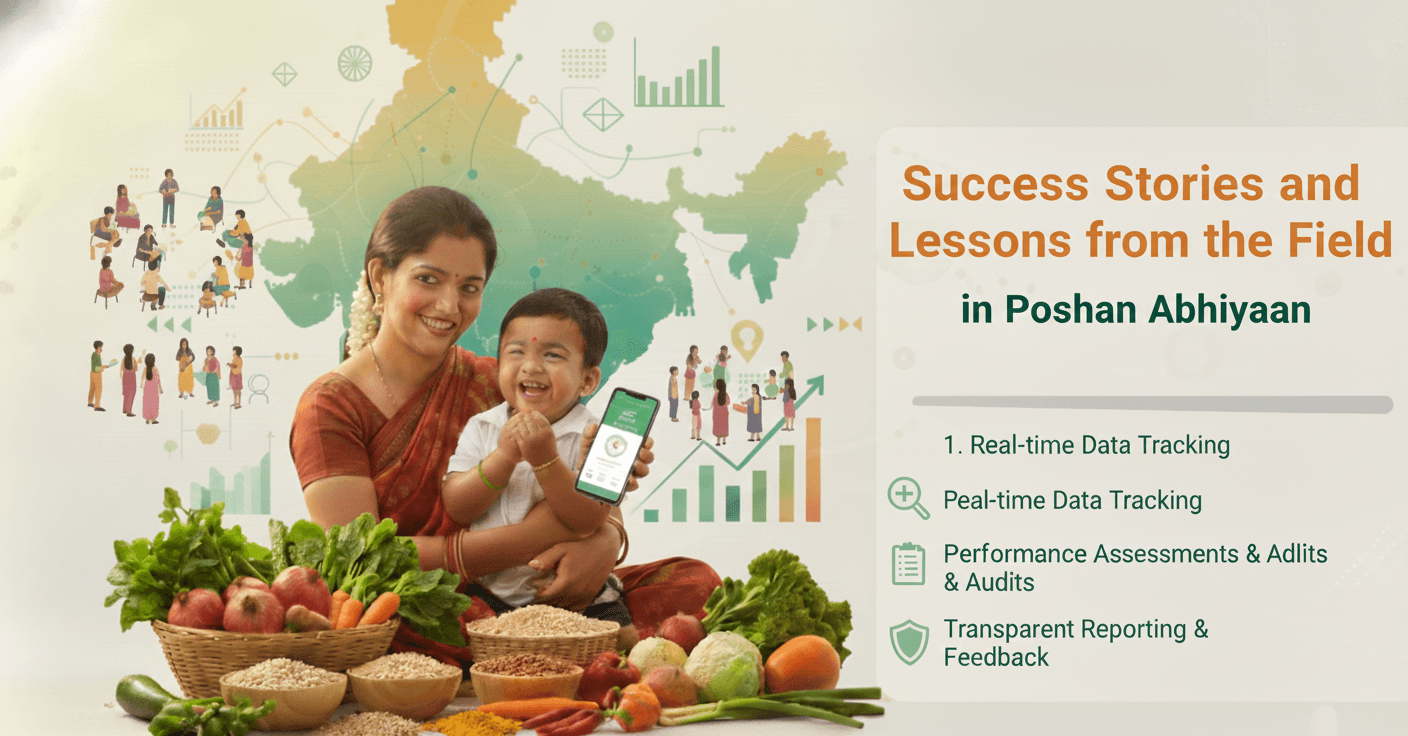
Policy documents explain what should happen. Field stories show what actually works. Across India, Poshan Abhiyaan has generated numerous examples where committed frontline workers, supportive local leadership, and community participation have led to real nutrition improvement. These poshan abhiyan success stories offer valuable lessons that go beyond guidelines and frameworks. This article brings together practical experiences, anganwadi best practices, and community nutrition models that have delivered visible impact. The focus is not on celebrating success for its own sake, but on understanding why certain approaches worked and how they can be adapted elsewhere.
Why Field Success Stories Matter in Nutrition Programmes
Nutrition programmes operate in complex social settings. What works in one village may fail in another unless local realities are understood. Field stories help to:
- Translate policy into practice
- Identify scalable solutions
- Motivate frontline workers
- Build confidence among communities
Documenting field implementation success ensures that learning travels faster than problems.
Success Story 1: Anganwadi-Led Growth Monitoring Revival
In several districts, Anganwadi centres that struggled with low attendance revived participation through simple changes. Key actions included:
- Fixing a monthly “nutrition day” known to all families
- Using visible growth charts to explain progress to parents
- Regular follow-ups for underweight children
This example highlights how basic anganwadi best practices, when done consistently, can transform service uptake.
Success Story 2: Community Nutrition Models Driven by Local Leadership
In some villages, Panchayats and women’s self-help groups played a leading role in nutrition improvement. Their approach included:
- Community discussions on child feeding
- Monitoring of vulnerable households
- Local solutions using affordable foods
These community nutrition models worked because they built ownership rather than dependence.
Success Story 3: Women and Child Nutrition Stories from the Ground
One recurring theme in women and child nutrition stories is the power of trust. Anganwadi Workers who:
- Spoke in simple language
- Respected cultural practices
- Offered practical advice
Were more successful in changing behaviours than those relying only on instructions. Relationships mattered as much as information.
Success Story 4: ICDS Innovation Stories Using Digital Tools
In some blocks, digital tools were used creatively. Examples included:
- Using simple photos to track attendance
- Reviewing growth trends during supervisor meetings
- Identifying high-risk children quickly
These icds innovation stories show that technology works best when combined with field insight.
What Made These Field Implementation Successes Work
Across different regions, successful initiatives shared common elements:
- Strong frontline ownership
- Supportive supervision
- Community participation
- Focus on follow-up, not just activity
These factors mattered more than additional funding or complex systems.
Lessons from Anganwadi Best Practices
Successful Anganwadi centres consistently:
- Maintained accurate records
- Followed fixed routines
- Communicated clearly with families
- Took pride in their work
These anganwadi best practices created predictable, reliable services that communities trusted.
Scaling Community Nutrition Models: What to Keep in Mind
Not every model can be copied directly, but principles can be adapted. For scaling community nutrition models:
- Respect local context
- Involve community leaders early
- Keep solutions simple
- Measure progress regularly
Scaling works best when adaptation is encouraged, not discouraged.
Local Nutrition Transformation: Small Changes, Big Impact
Many examples of local nutrition transformation began with small, practical changes:
- Regular home visits
- Consistent counselling messages
- Improved coordination with health workers
Over time, these small actions led to measurable improvements in nutrition indicators.
Challenges Faced and How They Were Overcome
Even successful initiatives faced challenges:
- Initial community resistance
- Workload pressure on workers
- Data quality issues
What helped overcome these challenges was persistence, peer learning, and support from supervisors.
Why These Stories Matter for Decision-Makers
For administrators and policymakers, poshan abhiyan success stories provide:
- Evidence of what works
- Guidance for resource allocation
- Inputs for training programmes
- Motivation for frontline systems
Decisions grounded in field realities are more likely to succeed.
FAQs
Frequently Asked Questions (FAQs)
What are poshan abhiyan success stories?
Examples where nutrition interventions led to measurable improvements on the ground.
Why are anganwadi best practices important?
They ensure consistency, trust, and effective service delivery.
What are community nutrition models?
Approaches that involve communities directly in improving nutrition outcomes.
What is field implementation success?
Successful execution of programmes under real-world conditions.
Why focus on women and child nutrition stories?
Because maternal and child health outcomes are closely linked.
What are icds innovation stories?
Examples where new approaches improved ICDS service delivery.
Can local nutrition transformation be scaled?
Yes, if adapted thoughtfully to local contexts.
What role do Anganwadi Workers play in success?
They are the primary drivers of implementation and community trust.
Are digital tools necessary for success?
They help, but success depends more on people than technology.
How can these lessons inform future programmes?
By guiding training, supervision, and planning decisions.
Final Takeaway
Success in nutrition programmes does not come from isolated actions or short-term campaigns. It comes from consistent effort, community trust, and learning from the field. The most powerful poshan abhiyan success stories, effective anganwadi best practices, and inspiring women and child nutrition stories show that change is possible even with limited resources. These experiences offer a roadmap for achieving sustainable local nutrition transformation across India. Field lessons are not side stories. They are the blueprint for better nutrition outcomes.