
Blog
Training and Capacity Building for Frontline Nutrition Workers
Nutrition programmes succeed or fail at the frontline. No matter how well a policy is designed, its impact depends on the skills, confidence, and judgement of the workers delivering services every day. In India’s nutrition ecosystem, this makes training and capacity building for Anganwadi Workers and other frontline staff not just important, but essential. Under ICDS and Poshan Abhiyaan, frontline nutrition workers are expected to manage growth monitoring, counselling, digital reporting, community engagement, and coordination with health systems. This expanding role demands structured, continuous, and practical training. This is where anganwadi training modules, icds training program frameworks, and modern learning approaches come into play. This article explains why capacity building matters, what effective training looks like, and how it directly improves nutrition outcomes.
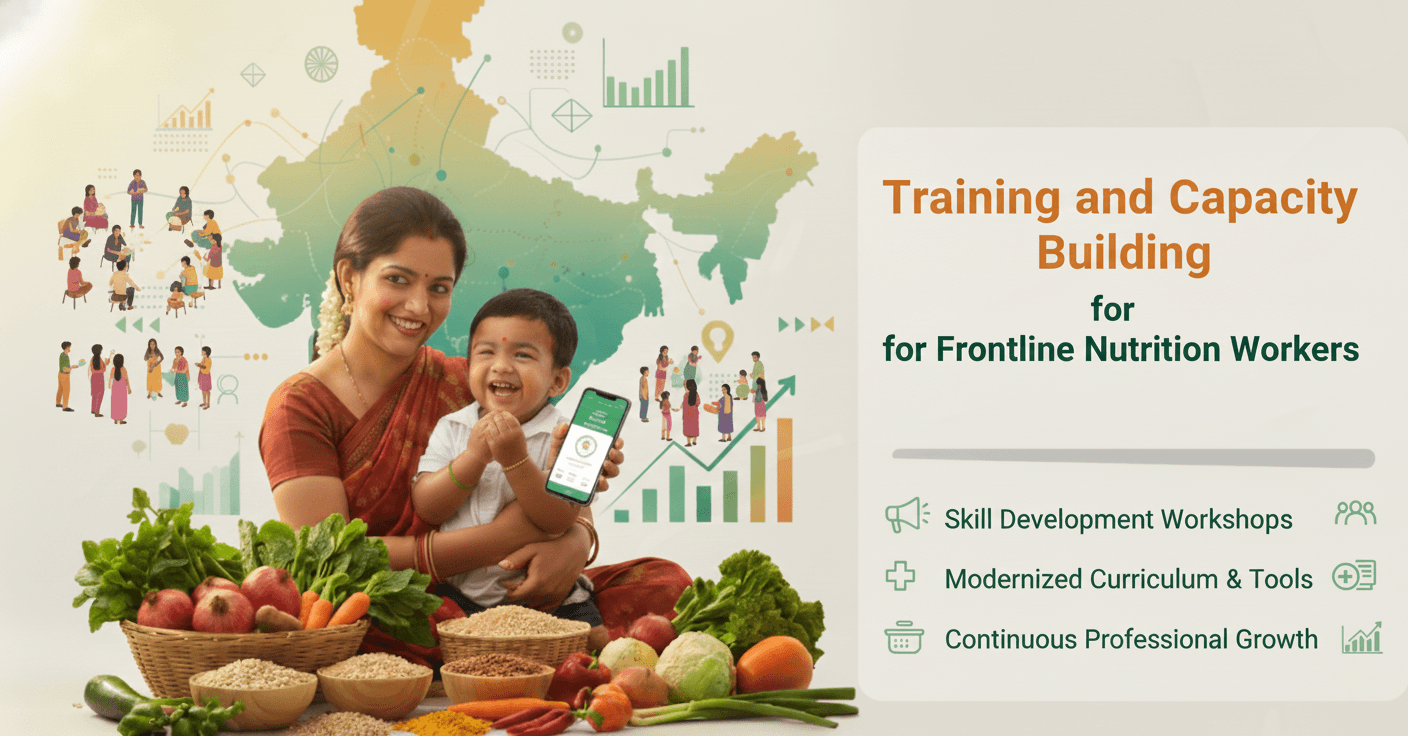
Why Training Frontline Nutrition Workers Is Critical
Frontline nutrition workers operate at the intersection of policy and people. Their decisions affect:
- Early detection of malnutrition
- Quality of counselling provided to families
- Accuracy of growth and service data
- Trust between communities and the system
Without regular training, even experienced workers can struggle to keep up with evolving guidelines, digital tools, and reporting requirements. Strong skill development in nutrition ensures that programmes remain effective, not just compliant.
Understanding the ICDS Training Program Structure
The icds training program is designed to build both technical knowledge and practical skills. It typically covers:
- Child growth monitoring and nutrition indicators
- Maternal nutrition and infant feeding practices
- Record keeping and reporting
- Community engagement techniques
- Coordination with health services
When training is aligned with real field conditions, it improves confidence and performance.
Anganwadi Training Modules: What They Should Include
Well-designed anganwadi training modules go beyond theory. Effective modules focus on:
- Hands-on demonstrations
- Case-based learning
- Problem-solving in real scenarios
- Clear standard operating procedures
Modules that reflect daily challenges are more likely to be retained and applied on the ground.
Capacity Building for Anganwadi Workers: Beyond One-Time Training
True capacity building for anganwadi workers is not achieved through one-off sessions. It requires:
- Refresher trainings
- Supportive supervision
- Peer learning opportunities
- On-the-job mentoring
Capacity building is a continuous process, not an event.
Poshan Abhiyaan Training: Aligning Skills with Programme Goals
Poshan abhiyan training focuses on strengthening outcome-based service delivery. Key priorities include:
- Accurate growth monitoring
- Behaviour change communication
- Use of digital tools
- Convergence with health and sanitation services
Training under Poshan Abhiyaan emphasises why tasks matter, not just how to complete them.
Nutrition Education Training for Community Impact
Frontline workers are often the primary source of nutrition knowledge in their communities. Nutrition education training equips them to:
- Address myths and misconceptions
- Promote locally available nutritious foods
- Counsel families using simple, relatable language
- Encourage sustained behaviour change
Strong education skills amplify the impact of every interaction.
Digital Learning for Field Workers: A Growing Necessity
As programmes become more technology-driven, digital learning for field workers is becoming essential. Digital learning enables:
- Flexible access to training content
- Standardised messaging across regions
- Quick updates on policy or tool changes
- Reduced travel and time costs
When combined with in-person support, digital learning strengthens reach and consistency.
Linking Skill Development to Nutrition Outcomes
Effective skill development in nutrition has a direct impact on programme performance. Improved skills lead to:
- Better identification of at-risk children
- More effective counselling
- Higher data accuracy
- Improved service uptake
When frontline workers feel capable and supported, outcomes improve naturally.
Common Gaps in Training and How to Address Them
Some common training gaps include:
- Overemphasis on reporting over service quality
- Limited hands-on practice
- Lack of follow-up after training
These gaps can be addressed by:
- Integrating training with field supervision
- Using real-life case studies
- Providing job aids and reference materials
Training must support workers, not overwhelm them.
What Makes a Training Program Effective
High-impact training programmes usually share a few features:
- Clear learning objectives
- Practical, field-relevant content
- Regular refreshers
- Feedback mechanisms
When training respects frontline realities, it delivers results.
FAQs
Frequently Asked Questions (FAQs)
Why are anganwadi training modules important?
They ensure workers have the knowledge and skills required for effective service delivery.
What does the icds training program cover?
Nutrition, health, early childhood care, reporting, and community engagement.
How does capacity building for anganwadi workers help programmes?
It improves confidence, accuracy, and consistency in service delivery.
What is included in poshan abhiyan training?
Growth monitoring, counselling, digital tools, and convergence practices.
Why is nutrition education training important?
Because behaviour change depends on clear and trusted communication.
How does digital learning for field workers support training?
It provides flexible, scalable, and up-to-date learning opportunities.
Is one-time training enough for frontline workers?
No. Continuous learning and refresher training are essential.
How does skill development in nutrition improve outcomes?
It leads to better identification, counselling, and follow-up of beneficiaries.
Who is responsible for frontline training?
ICDS systems with support from state, district, and training institutions.
What is the biggest challenge in frontline training?
Ensuring training is practical, relevant, and followed up in the field.
Final Takeaway
Training and capacity building are not support activities. They are core programme functions. Without skilled frontline workers, even the best-designed nutrition schemes cannot deliver results. Strong anganwadi training modules, a responsive icds training program, continuous capacity building for anganwadi, and effective poshan abhiyan training ensure that frontline nutrition workers are prepared, confident, and capable. When nutrition workers are trained well, systems function better, communities trust services more, and children receive the care they deserve. That is the true value of investing in frontline capacity building.