Blog
Using Dashboards and Analytics for Better Decision-Making under Poshan Abhiyaan
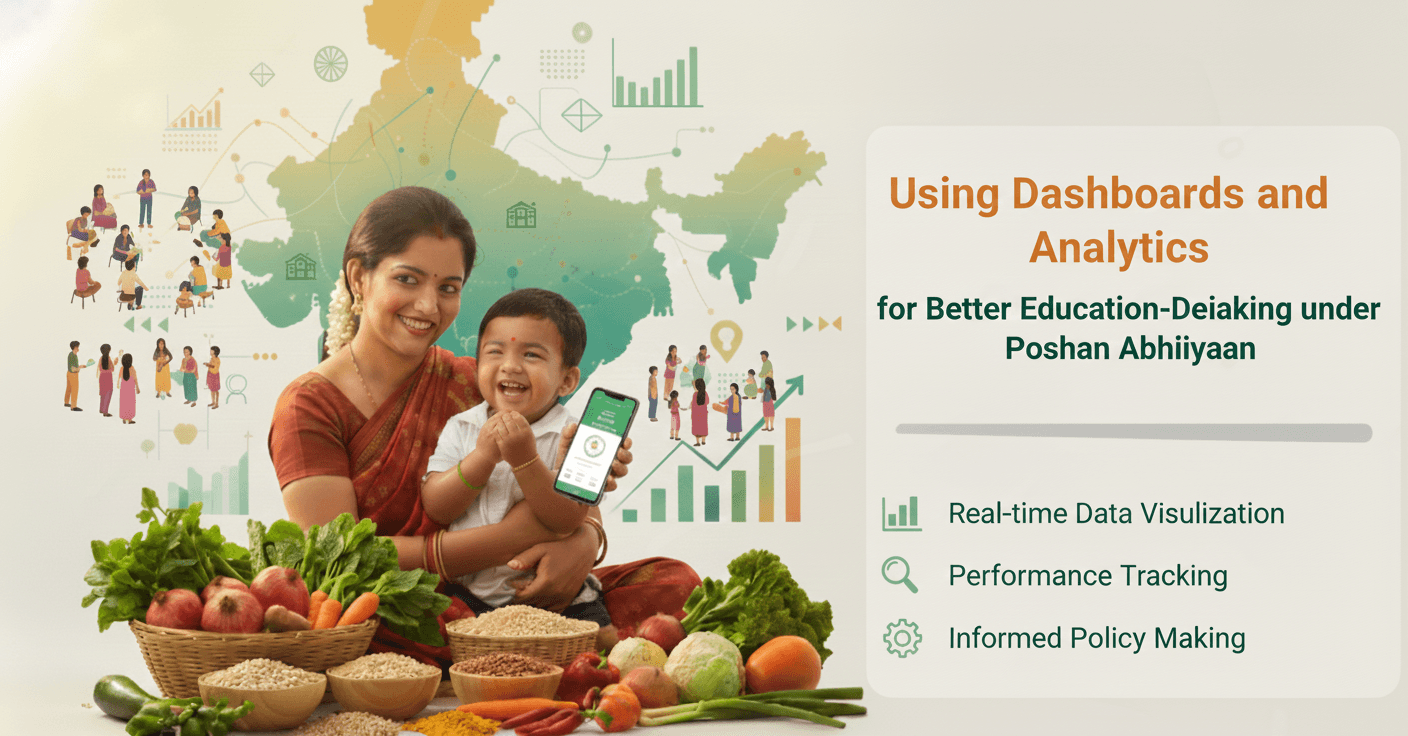
Nutrition programmes succeed or fail not only because of what is delivered on the ground, but also because of how decisions are made at every level. For years, decision-making under ICDS relied on delayed reports, fragmented data, and manual reviews. Poshan Abhiyaan has changed that reality by introducing dashboards and analytics as core governance tools. Today, the poshan dashboard, combined with nutrition data analytics, enables officials to move from reactive responses to proactive planning. This shift towards data-driven decision-making is transforming how nutrition services are monitored, prioritised, and improved across India. This article explains how dashboards and analytics work under Poshan Abhiyaan, who should use them, and how they can be leveraged to make better, faster, and more accountable decisions.
Why Data Matters in Nutrition Programmes
Nutrition outcomes are influenced by multiple factors and vary widely across regions. Without reliable data, administrators are left guessing where the gaps are. Poor data systems lead to:
- Late identification of malnutrition
- Inefficient use of resources
- Repeated reporting without action
- Weak accountability
The shift to real-time nutrition data addresses these challenges by giving decision-makers timely visibility into what is actually happening on the ground.
Understanding the Poshan Dashboard
The poshan dashboard is a digital interface that consolidates data from the field and presents it in an easy-to-understand visual format. It provides insights on:
- Beneficiary coverage
- Growth monitoring trends
- Service delivery status
- Performance at state, district, block, and Anganwadi levels
Instead of scanning lengthy reports, officials can identify issues within minutes.
ICDS Monitoring Dashboard: From Reporting to Review
The icds monitoring dashboard has fundamentally changed how ICDS performance is reviewed. Earlier systems focused mainly on whether reports were submitted. Dashboards now focus on:
- What the data is showing
- Where services are lagging
- Which areas need attention
This allows supervisors and administrators to prioritise field visits, training, and corrective action more effectively.
Nutrition Data Analytics: Turning Numbers into Insight
Raw data alone does not improve outcomes. Nutrition data analytics helps interpret patterns, trends, and risks hidden within large datasets. Analytics supports:
- Identification of high-risk geographies
- Tracking progress over time
- Comparing performance across regions
- Assessing the impact of interventions
This analytical layer transforms data into a practical decision-support tool.
Role of Real-Time Nutrition Data in Governance
Access to real-time nutrition data enables faster and more targeted responses. For example:
- Sudden drops in growth monitoring coverage can trigger immediate follow-up
- Persistent undernutrition trends can inform focused interventions
- Gaps in service delivery can be addressed before they widen
Timeliness is critical in nutrition, where delays can have long-term consequences.
Nutrition Information System: The Backbone of Decision-Making
A strong nutrition information system integrates data from multiple sources into a single framework. Such systems ensure:
- Consistency across indicators
- Reduced duplication of records
- Better coordination between departments
- Reliable inputs for dashboards and analytics
Without a robust information system, dashboards risk becoming superficial displays rather than decision tools.
Poshan Tracker Analytics at the Field and Administrative Level
Poshan tracker analytics connects frontline data entry with high-level decision-making. At the field level:
- Anganwadi Workers’ data feeds directly into dashboards
- Growth trends are visible over time
At the administrative level:
- Officials can drill down from state to village
- Performance gaps can be traced to specific locations
This end-to-end visibility strengthens accountability across the system.
How Dashboards Enable Data-Driven Decision-Making
True data-driven decision-making goes beyond reviewing numbers. Effective use of dashboards allows officials to:
- Prioritise high-burden areas
- Allocate resources more efficiently
- Design targeted capacity-building efforts
- Monitor the impact of policy changes
Decisions based on evidence are more likely to produce measurable results.
Who Should Use Dashboards and How
Dashboards are useful at every level, but usage must match responsibility.
- Supervisors can identify Anganwadi centres needing support
- CDPOs can plan block-level interventions
- District officials can allocate funds and manpower
- State teams can monitor trends and redesign strategies
Training users to interpret data correctly is as important as providing access.
Common Challenges in Using Dashboards Effectively
Despite availability, dashboards are sometimes underutilised. Common issues include:
- Focusing only on rankings instead of trends
- Limited understanding of indicators
- Over-reliance on numbers without field verification
These challenges can be addressed through regular data review meetings and capacity building.
Best Practices for Using Nutrition Dashboards
To maximise impact:
- Review dashboards regularly, not only during reporting cycles
- Focus on changes over time, not single data points
- Combine dashboard insights with field observations
- Use data to support, not penalise, frontline workers
When used thoughtfully, dashboards strengthen systems rather than add pressure.
FAQs
Frequently Asked Questions (FAQs)
What is a poshan dashboard?
It is a digital platform that displays nutrition and service delivery data visually.
How does nutrition data analytics help decision-making?
It identifies patterns and risks that are not visible in raw data.
What is an icds monitoring dashboard used for?
To track ICDS performance and identify areas needing attention.
Why is real-time nutrition data important?
Because early action can prevent long-term nutrition damage.
What is a nutrition information system?
A system that integrates, manages, and analyses nutrition-related data.
Who uses poshan tracker analytics?
Supervisors, district officials, state teams, and programme managers.
Does data-driven decision-making replace field visits?
No. It helps prioritise and improve the effectiveness of field visits.
What are common mistakes in dashboard usage?
Over-focusing on rankings and ignoring context.
How can dashboard data improve resource allocation?
By directing resources to high-need areas based on evidence.
Is training required to use dashboards effectively?
Yes. Understanding indicators is essential for correct interpretation.
Final Takeaway
Dashboards and analytics have become central to how Poshan Abhiyaan functions. When used well, the poshan dashboard, icds monitoring dashboard, and poshan tracker analytics turn data into action. Strong nutrition data analytics, supported by a reliable nutrition information system, enables faster responses, smarter planning, and more accountable governance. Most importantly, it ensures that decisions are based on reality, not assumptions.